How Pink Can Your Ground Beef Br
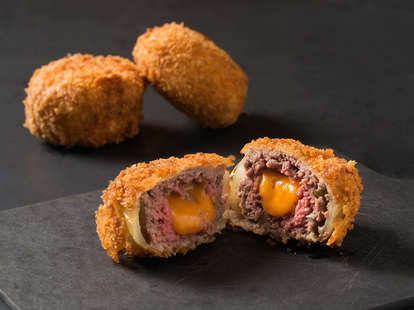
Cole Saladino/Thrillist
When the Internet saw our recipe for cheeseburger onion ring bites on Facebook, it allow out a commonage gasp considering the meat was the color of Steve Buscemi in Reservoir Dogs, which is to say, pink and a little encarmine. Nosotros weren't worried almost contamination because we used high-quality beefiness, only others seemed to recall that rare meat is as unsafe every bit a adapt-wearing jewelry store robber who doesn't believe in tipping.
So to clear up any misconceptions nearly meat safety, nosotros spoke with several food safe experts: Suki Hertz, food science professor from The Culinary Found of America, Mary Meck Higgins, nutrition PhD and associate professor at Kansas State University, and Jacqueline Aizen, registered dietitian and regular Thrillist correspondent.
Nosotros were surprised to acquire that despite stringent USDA guidelines, eating pink meat isn't a black-and-white issue. The relative risk of contamination varies based on meat type, source, and pure chance, and we learned that in do many chefs walk on the wild side of temperature regulations in order to achieve a juicy, tender piece of meat. And so don't worry nigh calling a hospital if your steak bleeds out, but read on to acquire when to pass on a rare burger.
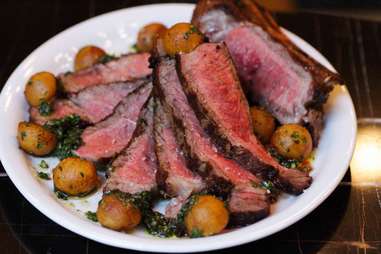
Rare steaks are fine, footing beef is questionable
Co-ordinate to Hertz, the primary danger zone on a cutting of beef is the outside layer where the virtually common E. coli strains and other pathogens breed. Searing a whole steak cut volition kill nigh bad bacteria and sterilize the meat, just Higgins (and the USDA) are more skeptical because other strains have the potential to contaminate the whole musculus.
Function of how chefs can go away with serving rare steaks or steak tartar is by carefully sourcing their proteins. Aizen goes and so far as to suggest never consuming mill-farmed animals, even when fully cooked, because the risks of contamination are so much college.
This is especially true with footing beef. Hertz cited a stat that a low-quality burger patty could comprise meat from upwards to 283 cows, which aside from being a weirdly specific number, as well makes information technology hard to trust that no susceptible surface-level musculus ended upwardly in the mix. So upkeep burgers must always be cooked to a safety internal temp of 160 degrees Fahrenheit.
That said, ane way restaurants tin decrease the risk of a pathogen-filled patty is by grinding their ain burgers themselves from a single muscle, profoundly decreasing the chance of cross-contagion.
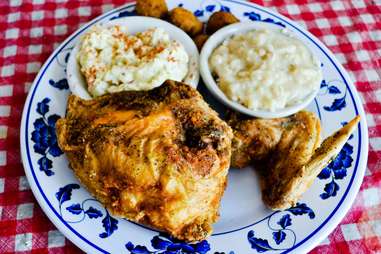
Pinkish poultry has risks of salmonella, but is a professional person gray zone
Here's where things get controversial. In our initial conversation with Hertz, she suggested that just like beef, well-nigh unsafe bacteria in chicken lives on the outside of the meat. Therefore many restaurants melt nether the suggested temperature (165 degrees Fahrenheit) in order to maintain a juicy interior.
When we consulted the other nutritionists, both threw up red flags, citing a serious take chances of salmonella and Campylobacter jejuni, which is slightly less dangerous just still bloody stool-inducing.
"If you get to the FDA website for chance cess, they're never going to write this," says Hertz. "But if I bought my chicken from a squeamish local farm, I wouldn't exist scared. If I was buying it from a grocery shop, I would be a little more than scared."
Her condescending nature doesn't behave over into the classroom, where she teaches students the black-and-white food condom rules, merely years dealing with the realities of professional cooking have made her less afraid of shades of pink. However she is quick to point out that salmonella is quick to mutate and that even more innocuous strains tin plough mortiferous, a bespeak echoed by Higgins who cited a staggering two,300 different types of the bacteria.
Just like with beef, unsafe bacteria live on the outside of craven or turkey and virtually preparation methods volition melt the outside to a safety temperature. Internally the FDA suggests heating to 165 degrees Fahrenheit, but Hertz has noticed many restaurants settle for 160 degrees Fahrenheit in order to maintain moisture levels without compromising rubber. Then pink chicken won't impale anyone, merely even the nigh adventurous eaters are probably averse to a encarmine bird based on texture and appearance alone.
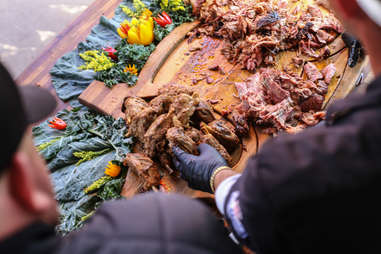
The gamble is ever at that place in pork, but less so
Rare pork used to be associated with a high take a chance of trichinella parasites because manufacturing plant pigs ate literal garbage. Livestock dietary regulations have largely solved this problem, so the FDA's internal-temperature informational has dropped over time from 165 degrees to 145 degrees. Fans of rare pork chops rejoice, merely don't go biting into raw abdomen: the E. coli risks are still real, so commodity pork should be cooked with care.
Rare lamb follows the same rules
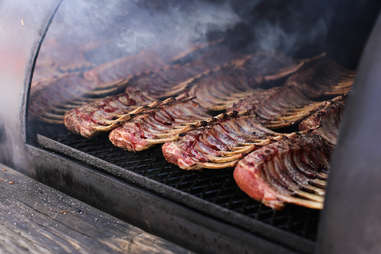
Lamb is susceptible to Eastward. coli and Campylobacter germs, only similar all the other proteins on here, almost of the bacteria live in the exterior and will be sterilized with a squeamish sear. Which is reassuring given the rare (and correct!) preparation of nigh racks of lamb, but depression-quality lamb meat can even so suffer from the same dangers as the rest of the proteins on this list.
Merely fish is another story
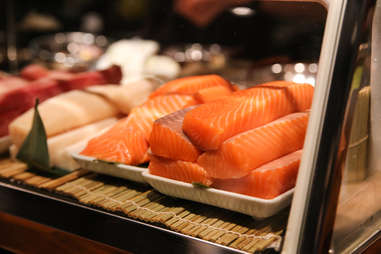
Co-ordinate to Hertz, seafood is more vulnerable to parasites than land-based proteins (halibut is a primary offender), but modern supply-chain techniques like wink freezing have cut down significantly on the take a chance. If a piece of seafood does have parasites, though, cooking thoroughly won't rid the meat of them. This ways that rareness doesn't even matter.
Aforementioned goes for toxins released if a fish is improperly caught and candy. No amount of cooking will solve that problem, then the all-time fashion to forbid food poisoning from seafood is to avert nebulously sourced fish.
Sign up here for our daily Thrillist email, and get your fix of the best in food/drink/fun.
Dan Gentile is a staff author at Thrillist. He's now thinking twice about rare burgers, but nevertheless eating tuna sashimi with reckless abandon. Follow him to raw tweets at @Dannosphere.
Source: https://www.thrillist.com/eat/nation/heres-when-its-safe-to-eat-pink-meat
0 Response to "How Pink Can Your Ground Beef Br"
Postar um comentário