Picassos Art Style Sticking Jornal Pieces on the Paintings Is Called
Appearing at the get-go of the 20th century, Collage Art began as a class of novelty art. This manner explored the incorporation of many unlike materials that were ofttimes glued together, to create a cutting-edge style of arts and crafts art that had never been seen earlier. The aesthetic surrounding Collage Fine art was described as being pieced together, which enabled the production of utterly unique creations. Viewed nether the guise of mixed media, Collage Art typically explored the highs and lows that encompassed the elements of formal art.
Tabular array of Contents
- ane The History of Collage Fine art: An Introduction
- two Collage Fine art Influences and Style
- two.1 Precursors of Collage Art
- 2.2 Associated Movements
- two.3 Collage as Commentary
- 3 Notable Collage Artists and Their Collage Examples
- 3.1 Henri Matisse (1869 – 1954)
- 3.ii Pablo Picasso (1881 – 1973)
- 3.3 Georges Braque (1882 – 1963)
- three.4 Hans Arp (1886 – 1966)
- three.5 Kurt Schwitters (1887 – 1948)
- 3.6 Hannah Höch (1889 – 1978)
- 4 Collage Fine art in Other Forms
- iv.1 Architecture
- 4.2 Music
- 4.iii Moving picture
- 5 The Legacy of Collage Art
- 6 Tips for Making Your Own Collage
- vi.1 Collect and Create Your Own Source Material
- 6.2 Organize Your Limerick Prior to Gluing Information technology Downwardly
The History of Collage Art: An Introduction
Becoming a distinctive office of Modern Art in the early twentyth century, Collage Art described the technique of assemblage that was used within this artistic creation of a new style. Despite the roots of Collage Fine art being traced back hundreds of years, this art form made a dramatic resurgence and was said to exist as an art class of novelty due to its one-of-a-kind aesthetic. Starting in the Modernist menstruum, before being propelled into the contemporary art world, Collage Art has endured many changes as more than artists began to explore it.
Taken from the French word coller, which ways to either stick together or glue, the term "collage" described the procedure that was taken when creating Collage Art. Collage within fine art was first coined by Cubist artists Georges Braque and Pablo Picasso, who were the first pioneers of this motion. Existing as the first two artists who worked with different mediums in an try to make art, Braque and Picasso began their cutting-edge assemblages around 1910.
The first example of Collage Art appeared within Braque'south 1912 artwork titled Fruit Dish and Glass, where he glued downwardly imitation wood-grained wallpaper. Following in Braque's footsteps, Picasso began to add newsprint to his oil paintings which made reference to the current events that were taking identify, as well as gluing rope effectually the edge of some canvases. Pioneers of the Collage Art movement, both Braque and Picasso composed their works from glued bits of colored paper, newspaper, and establish objects.
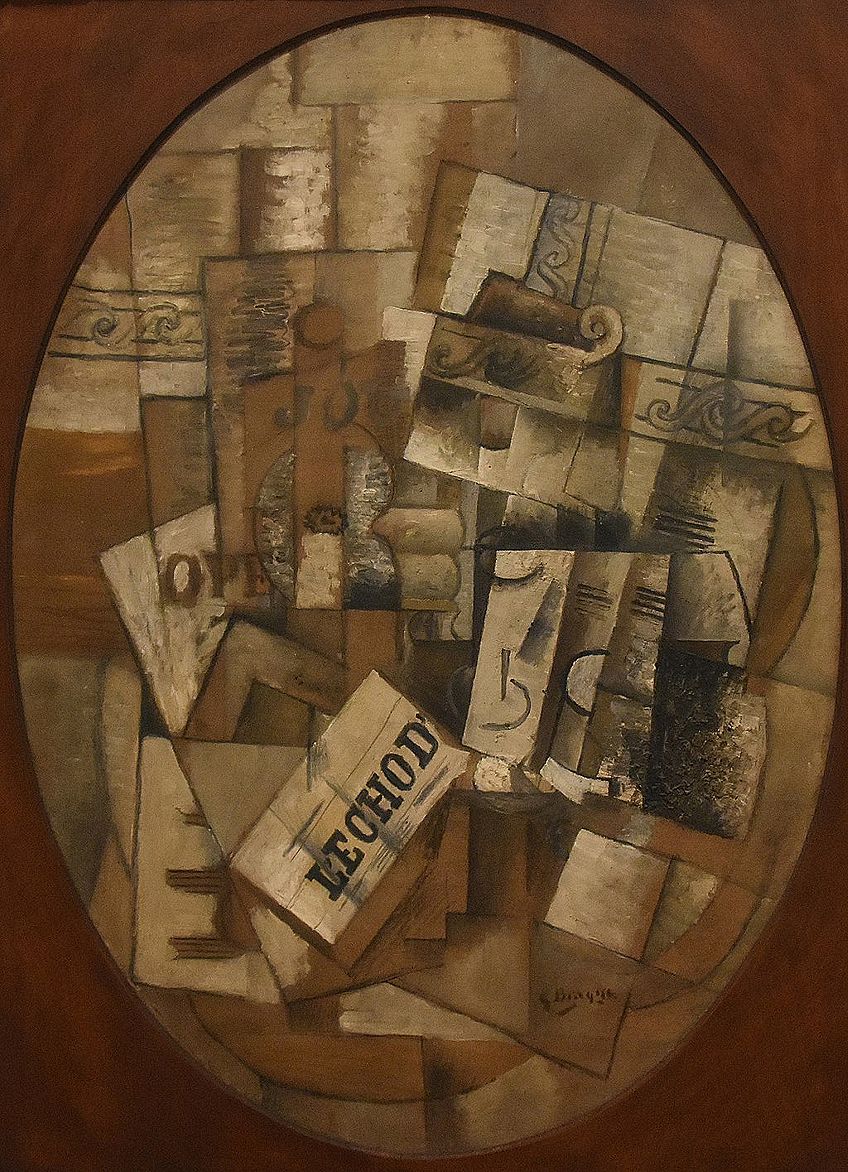 Yet Life with Glass, Die, Paper and Playing Card(1913) past Georges Braque;Richard Mortel from Riyadh, Saudi arabia, CC BY 2.0, via Wikimedia Eatables
A multifariousness of materials, such every bit newspaper, cloth, paint, found objects, magazine and newspaper clippings, and sections of other artworks and text were incorporated together before beingness glued onto a canvass or board to create an entirely new composition. This style substantially brought forth the production of a different form of art, which immune new types of artworks to be created. These materials were considered to be such a bold intermingling of artistic elements that the render of the collage medium was idea to revolutionize modern art.
Collage Art has been referred to as 1 form of mixed media art, equally many different types exist. The process of collage was viewed equally a mixture of both elevated and diminished elements that existed within formal art, with this mixture referring to the traditional definition of fine art equally well as art that was produced for mass consumption and commercial use. Thus, Collage Art existed equally a newer form of Modern art due to its combination of elements, which saw many artists employing this popular medium.
From its early roots in both Dadaism and Modernism, Collage Fine art existed as a medium that was as various as information technology was politically motivated. Due to its emergence after World War One, Art Collage allowed artists to experiment with existing materials such equally newsprint, magazines, tickets, propaganda, and photographs in social club to create new works of art. These materials were ripped apart and reassembled into visually powerful fusions that interacted together in such a unique way that added to the advanced process that encompassed Collage Art.
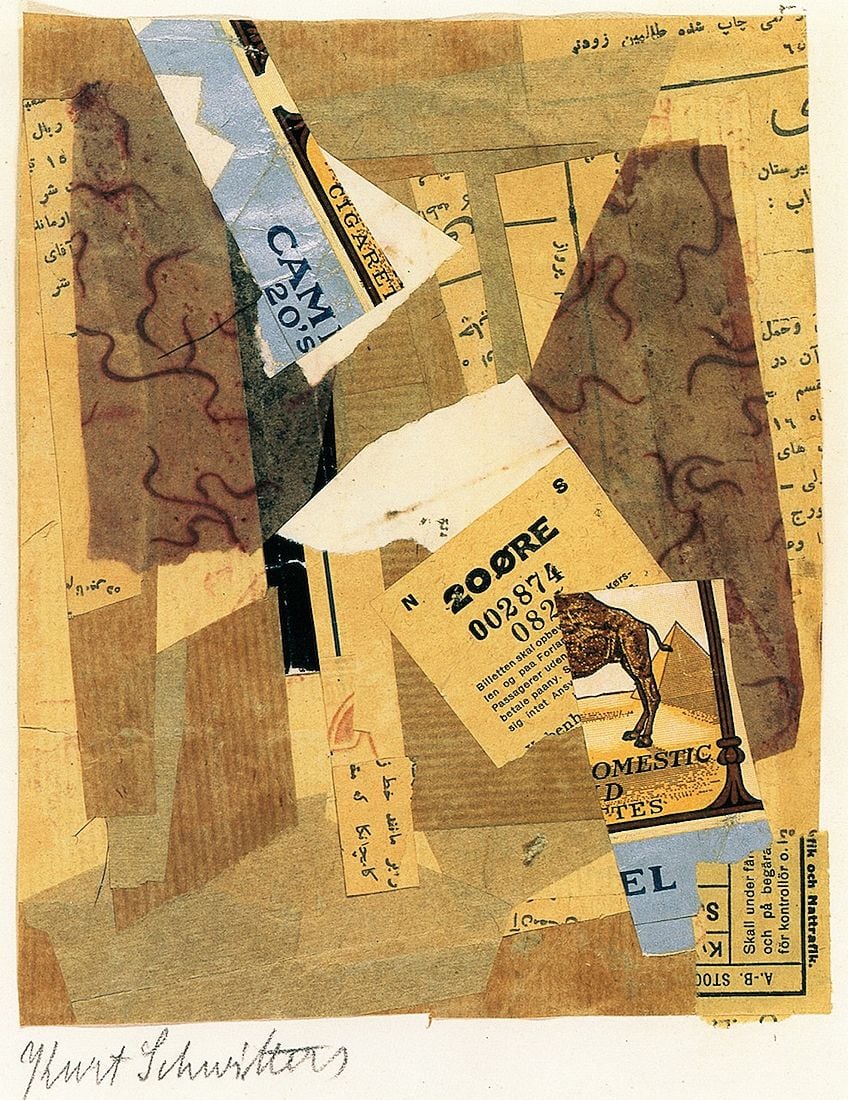 Cam 20S 20 Ore(1936) by Kurt Schwitters;Kurt Schwitters, Public domain, via Wikimedia Eatables
Through incorporating a variety of materials inside an artwork, Collage Fine art successfully subverted traditional definitions of what was important fine art. The incorporation of these materials allowed collage artwork to frankly question society'south tendency to disassemble fine art from ordinary objects through juxtaposing elements of high and low culture within works. Whether these compositions were purposeful or random, the comparing created past the contrast of different elements has long captivated the attending of artists.
Since images accept the power to take on new meanings within different contexts, the art of collage was able to easily overturn traditional meanings that were typically associated with art, every bit well as imply multiple meanings simultaneously. In doing so, Collage Fine art created works that did non simply fit into a unmarried and rigid assay. The style of collage held much creative potential, which in turn made the movement incredibly accessible for all types of artists.
Many innovative artists ranging from the modernism and contemporary era have made use of collage to query the supposedly traditional duty of the artist within the works they created. Through using institute and mass-produced objects, images, and materials that were non made past the artists themselves, Collage Fine art was able to undermine the customary importance that was placed on an creative person's hand in the making of their original work.
Thus, Collage Art was adopted to undermine the idea of importance when composing unique and avant-garde works.
Collage Art Influences and Manner
Collage describes the technique of creating an artwork through combining and gluing together a wide range of materials onto a surface like a canvas or lath. Withal, the style of collage differs depending on the techniques and materials that an creative person uses. For case, photomontage made sectional employ of photos in their artworks; decoupage involved gluing cutting colored paper or images onto an object; assemblage referred to a iii-dimensional collection of objects, and papiers collés described collages that were made only from bits of paper.
Precursors of Collage Art
The techniques associated with Collage Fine art were first used in Red china around 200 BC when paper was invented. The initial style of collage began to slowly come into fashion within 10th century Japan when calligraphers started to use glued paper and texts on surfaces when writing poesy. During the 15th and 16th centuries inside Europe, collage techniques were used in Gothic cathedrals when applying gold foliage panels, every bit well equally gemstones and other valuable metals that were practical to religious imagery and icons.
Collage was also seen as a method of fine art undertaken past hobbyists for a catamenia of time, as this style was used in items of memorabilia, such as photo albums, and books inside the 19th century. However, many institutions take attributed the history of collage and its official get-go within the art sphere to be dated effectually 1912, when both Picasso and Braque began to experiment with this style in their artworks.
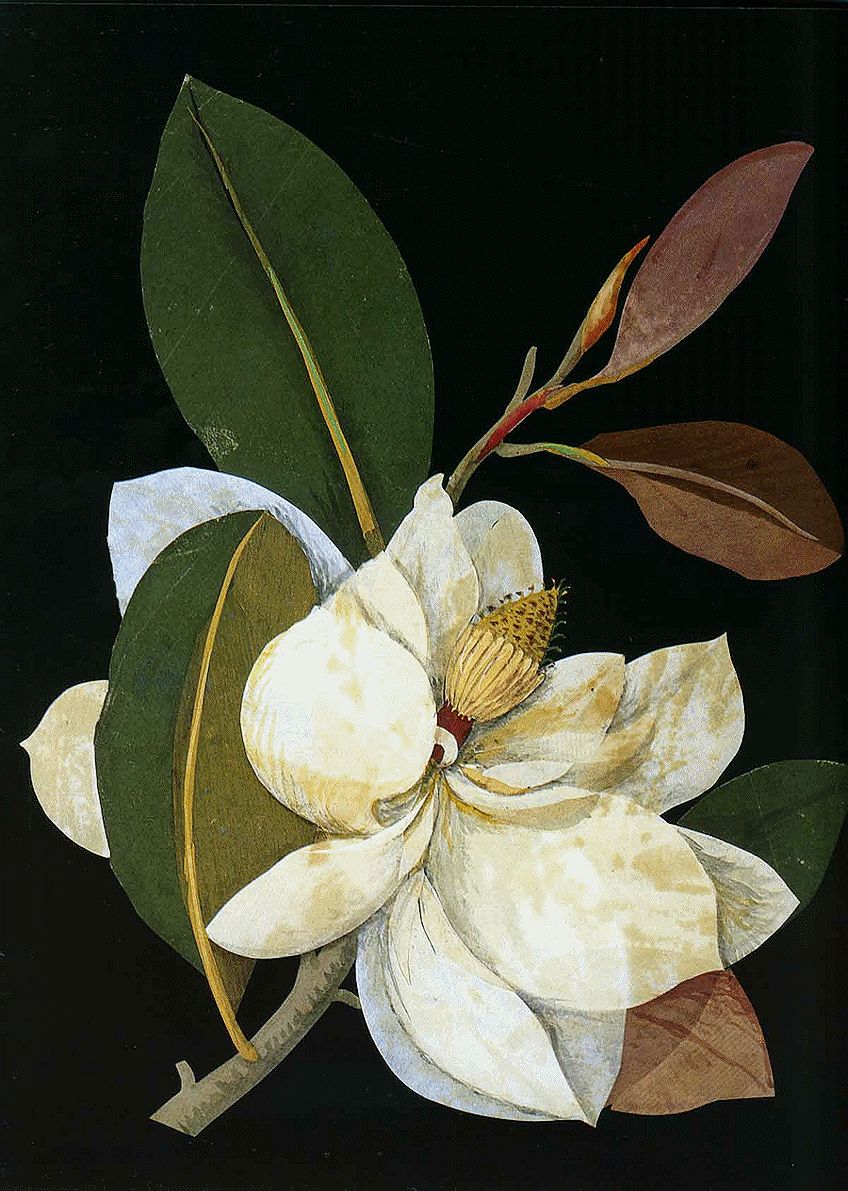 A botanical paper collage by Mary Delany; Mary Delany (1700-1788), Public domain, via Wikimedia Commons
Associated Movements
Inside the evolution and history of Collage Fine art, many other artistic movements had pregnant influence. The techniques of collage, which took inspiration from the Cubism move, became a primary element within both the Dada and Surrealist periods of art. In improver to these areas of art, collage was later represented in the Neo-Dada and Pop Art motility, as different collage techniques were used to explore various subject matters.
Cubism
Within the gimmicky sense, collage artwork was said to brainstorm with Cubist painters Georges Braque and Pablo Picasso. Cubist collages began experimenting with fragments of different and completely unrelated subject matter to achieve a deconstructed appearance and form. Despite Cubism being mainly associated with paintings, the techniques that Braque and Picasso experimented with within their works immune them to create collages that were substantially Cubist in nature.
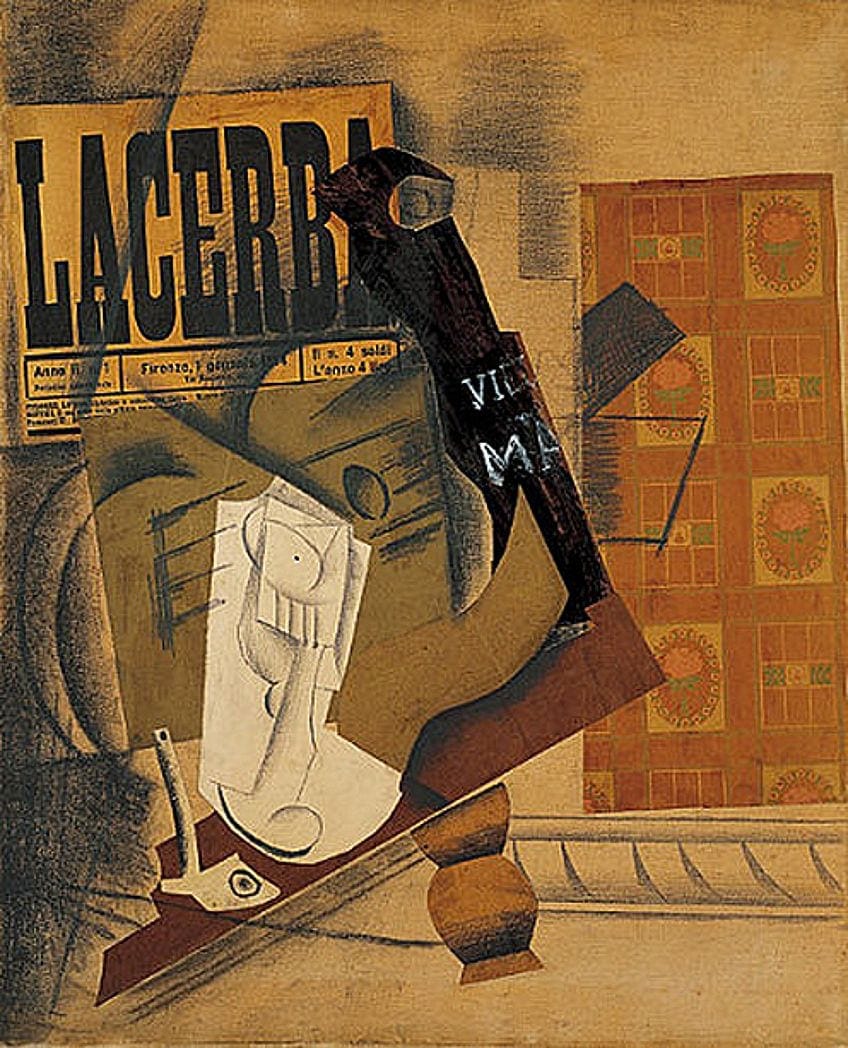 Pen and Pipe (1913) by Juan Gris; Juan Gris, Public domain, via Wikimedia Eatables
Cubism was able to pair perfectly with the Collage Art movement, every bit it allowed artists to selectively slice together a picture show of their option from a range of different elements. Due to this style, collage artwork had the ability to refrain from appearing flat, different traditional ii-dimensional painting. Thus, Cubist collages differ significantly from previous Cubist works, as the added element of collage was able to draw out areas of dimensionality and perspective.
Materials that were frequently utilized in collages by Cubist artists were painted cut-outs, patterned paper, and newsprint. Picasso demonstrated the use of these elements inside his 1913 artwork titled Bottle of Vieux Marc, Drinking glass, Guitar and Newspaper, in which he played around with these materials on his artwork. In addition to this piece of work, Braque represented the typical materials used in his Violin and Pipage artwork that he created in 1913.
Dadaism
The Dada movement was inspired past the cutting-border work that was produced by Picasso and Braque, with artists practicing within this group start to play around with collage in the 1920s. Dadaists strayed away from the favored still-life subject affair of Cubism and instead opted to create collages that integrated a wide range of imagery. In doing so, the discipline matter in Dada collages typically tended to correspond reimagined portraits and figures that were ingrained in fantasy.
The Dada motion arose due to the political turmoil that had engulfed Europe later on the Start World War, with these anxieties manifesting themselves in the Dadaist collages that were created. Notable artists like Hans Arp, who arrived in Paris in 1914 to avert being drafted into the German armed services, saw Picasso and Braque'south collages which ultimately inspired him to create his own. By 1915, Arp was exhibiting his Dadaist collage works in a gallery in Zurich.
Dadaists integrated more materials in their collages than their Cubist colleagues. Through combining a variety of elements, artists who created collages inside the Dada motion were historic for their creative use of presumably worthless and often overlooked objects. These items often included magazine cutting-outs, candy wrappers, tickets, and various three-dimensional ornaments. Through transforming transient ideas and materials into more refined pieces, Dadaists were able to call into question traditional perceptions of art.
Surrealism
In the wake of the Dada movement, Surrealism also stepped away from the still-life focus of Cubism in favor of experimenting with the elements of collage. Artists began to make all-encompassing use of collage within their works to create fictitious, unusual, and dream-similar scenes. Surrealists adapted the cut-and-paste technique of collage to produce works that seemed to be a production of one'due south subconscious, which allowed truly unique pieces to be created.
These Surrealist collages made use of materials such as illustrations, photographs, colored paper, and paint to expand on the strange subject field matter that was adopted within Dadaist collages. Thus, pieces that were reminiscent of strange dream sequences were created. This was seen in the works of Surrealist artists André Breton and Joseph Cornell, who made use of cluttered collage techniques to create coherent yet completely imaginary scenes.
Collage techniques that formed in the Dada era, such as photo-collage, relief assemblage, and overpainting, heavily influenced the evolution of Surrealist collages. Due to this influence, "collage" no longer solely implied works created with paper and glue. Surrealist artists began expressing an enchantment with text, which they began to incorporate within their collages. The start notable collages examples of this visual and exact alloy are demonstrated in the works of Max Ernst, who used collage in the late 1920s.
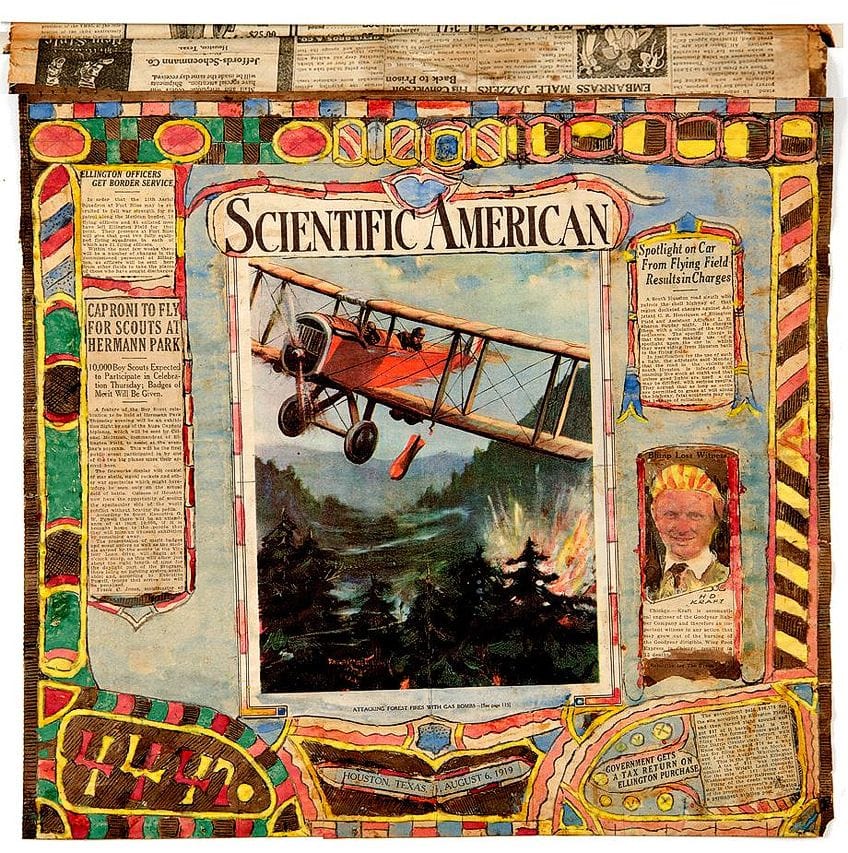 An case of the work of Charles Dellschau (before 1923);Charles Dellschau, Public domain, via Wikimedia Commons
The reason that the manner of collage differs so significantly from other creative styles is that information technology immune artists the opportunity to add commentary to their piece of work through the inclusion of mutual images and objects. In doing so, dimension was added to collages, which had the ability to further demonstrate the idea that was being carried along.
Within contemporary art, many artists displayed a sudden involvement in materials such as magazine and newspaper cutting-outs, printed words, photographs, dirty cloths, and even metallic pieces. This was due to the fact that the inclusion of these elements was able to successfully convey the criticisms and comments that the works implied, which was non previously possible in just painted works.
The method of collage fabricated the historical and political contexts of the work inseparable from one another, due to the fact that collages typically incorporated mass-produced images within their works. Thus, collage artwork existed equally an influential means of social commentary, as its power to question society's assumptions and biases made information technology a worthwhile art form that was explored inside a variety of other movements.
Notable Collage Artists and Their Collage Examples
Throughout Collage history, many significant collages painting pieces and works were made, which went on to greatly impact the direction of this cut-and-paste method of art cosmos. Some of the movement's more well-known artists have been listed below, along with their iconic collage works that helped shape the techniques inside the move.
Henri Matisse (1869 – 1954)
Known for his diverse cut-out collages, Henri Matisse exhibited techniques of collage long after the initial success of the movement. During the late 1940s, Matisse made a meaning change in his approach to his artistry and began working with paper during the last decade of both his career and life. Labeling his new creations as "cut-outs", his seemingly simplistic works managed to evoke great complication as he used gouache pigment to stick down dissimilar pieces of colored paper in sequences that would often resemble elements of the natural world.
Within his cutting-out types of collages, Matisse was most inspired by flowers, plants, animals, figures, and fifty-fifty abstract images. When creating his works, he bundled his cutting-outs into energetic and colorful compositions that gradually grew in scale the more he connected to work. This manner of creative creation immune Matisse to transcend the boundaries associated with traditional easel painting, as it gave him complete freedom to create fine art in whatsoever fashion he wanted to.
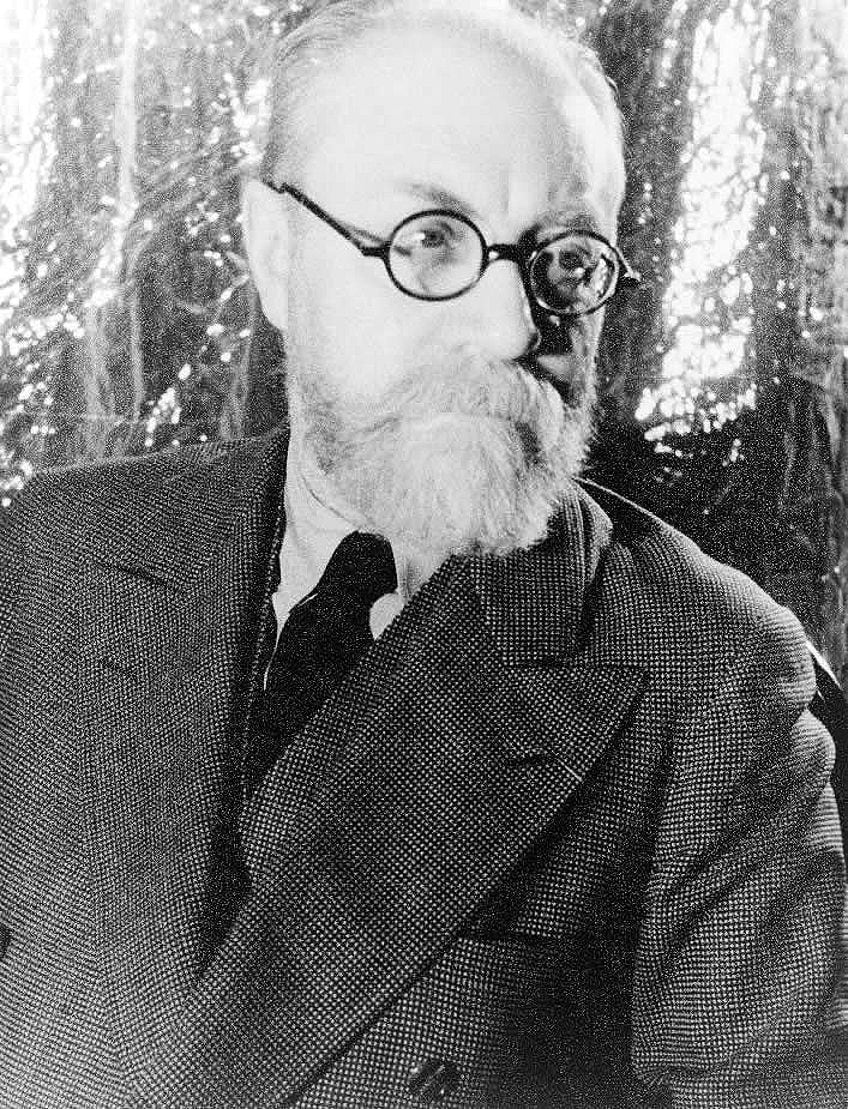 Portrait of Henri Matisse, taken by Carl van Vechten in 1933; Carl Van Vechten, Public domain, via Wikimedia Commons
One of his notable cut-outs works that displayed his compositional manner is his 1953 artwork titled The Sheaf. Matisse cut out a diverseness of colorful fronds that were thought to mimic a vivid fireworks display, which he then pasted onto a white background. This work, along with his other cutting-out works, demonstrated some of Matisse'due south most expressive creations from his career, equally he was able to direct translate his intense emotions into pieces of paper just by rearranging and pasting them in dissimilar compositions.
Inside his afterward artworks, Matisse was able to explore spatial ambiguity through his simple interpretation of forms and shapes. Additionally, Matisse explored the illusion of depth within art through the colorful and lively artworks he created, equally the intense hues of the paper he used managed to somewhat avoid coming across equally simply 2-dimensional.
Pablo Picasso (1881 – 1973)
Said to be one of the ii original pioneers of the Fine art Collage styles, Pablo Picasso began to experiment with this technique around 1912. Inspired by the works created by Georges Braque, Picasso commenced an intense stage of collage-making, where he was said to take created well-nigh a hundred collages in a brusk period. His early collage compositions fabricated use of artificial wood-grain paper, text, pieces of material, instruments, and other objects.
Picasso created his collages with farthermost precision to the point where he was likened to a doctor dissecting a cadaver. An example of i of the first Cubist collages made, as well as i of Picasso's well-nigh notable collages, is All the same Life with Chair Caning, created in 1912. Within this work, Picasso depicted various views of a café table property different items, such as a napkin, a knife, a piece of fruit, and a wine glass.
What makes this work and so interesting is that instead of painting a chair, Picasso stuck downwards a piece of oilcloth that was printed with the pattern of the chair caning. Additionally, he used a length of rope to frame the canvas. Both elements were utilized for their suggestive nature, as the cloth implied a physical chair, while the rope was a humorous take on the usually carved border of a table.
By including the messages "Jou" at the top of his piece of work, Picasso managed to seamlessly incorporate both wordplay and visual elements into his work. In doing then, his collages forced viewers to examine their own perceptions of what constituted an artwork, as well equally the relationship that existed betwixt formal art and common objects. Within his after works, Picasso mastered the style of collage as his pieces famously mixed high and low civilization, which had a notable bear on on the subsequent development of art within the 20th century.
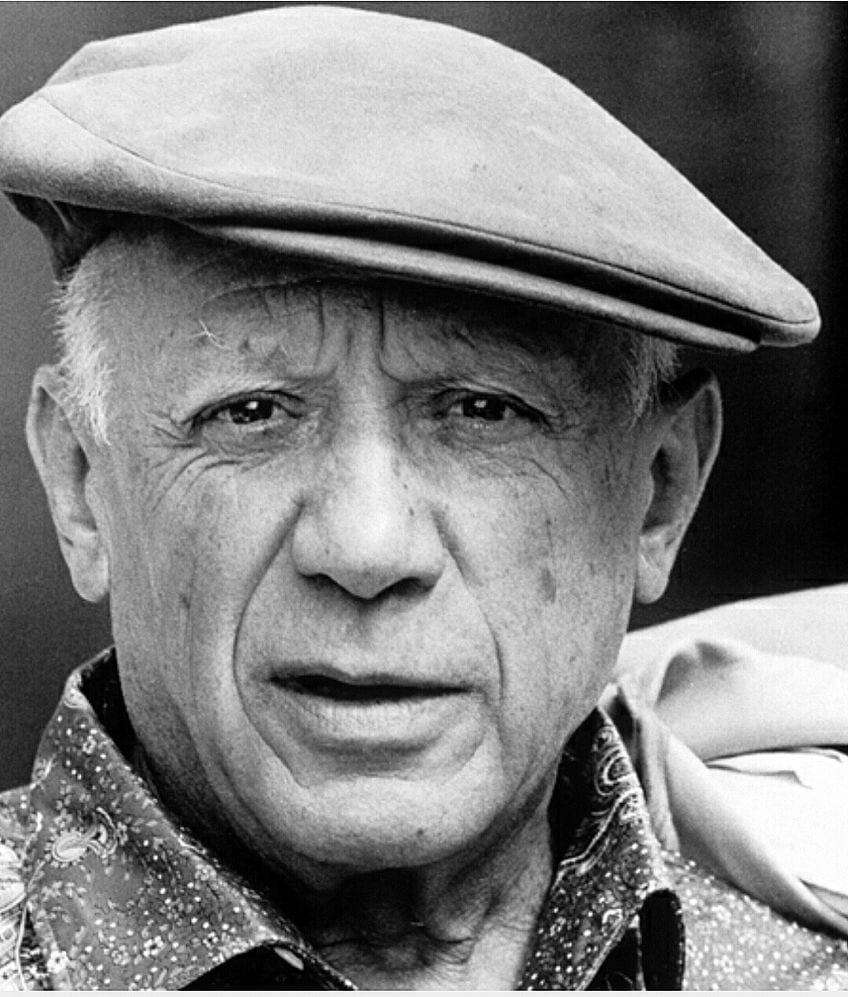 Photograph of Pablo Picasso in 1962;Argentina. Revista Vea y Lea, Public domain, via Wikimedia Eatables
Georges Braque (1882 – 1963)
Creating Collage artwork at the same time as Picasso, Georges Braque is considered to be the other original pioneer of Collage Art. Within his seminal works, he combined pieces of fake forest wallpaper into his Cubist depictions of objects. After buying a roll of wood-grain wallpaper that he constitute in a shop window, Braque began to cut and paste this paper into his various drawings. It was this technique that he shared with Picasso, which prompted him to begin experimenting with collage alongside Braque.
Braque's near influential case of collage art is his 1912 artwork titled Fruit Dish and Glass. Within this work, he stuck down pieces of the imitation-wood wallpaper he found. In doing so, Braque created intersecting areas of collage elements and cartoon within his work, which successfully called into question the formal ideas of perspective and infinite within art. Despite combining 2 seemingly juxtaposing elements, Braque'due south piece of work even so suggested pieces of a tabletop and door.
Within Braque's collage work, he explored the perception of space, which is what his Cubist works and the movement as a whole emphasized. While his add-on of glued-on $.25 of wallpaper emphasized a shallower space to investigate the idea of space, this collage element allowed a greater exploration of the feeling of shapes and how they related to one another. Thus, the artistic methods Braque's demonstrated in his collages became fundamental inside the growth and expansion of the collage technique as a whole.
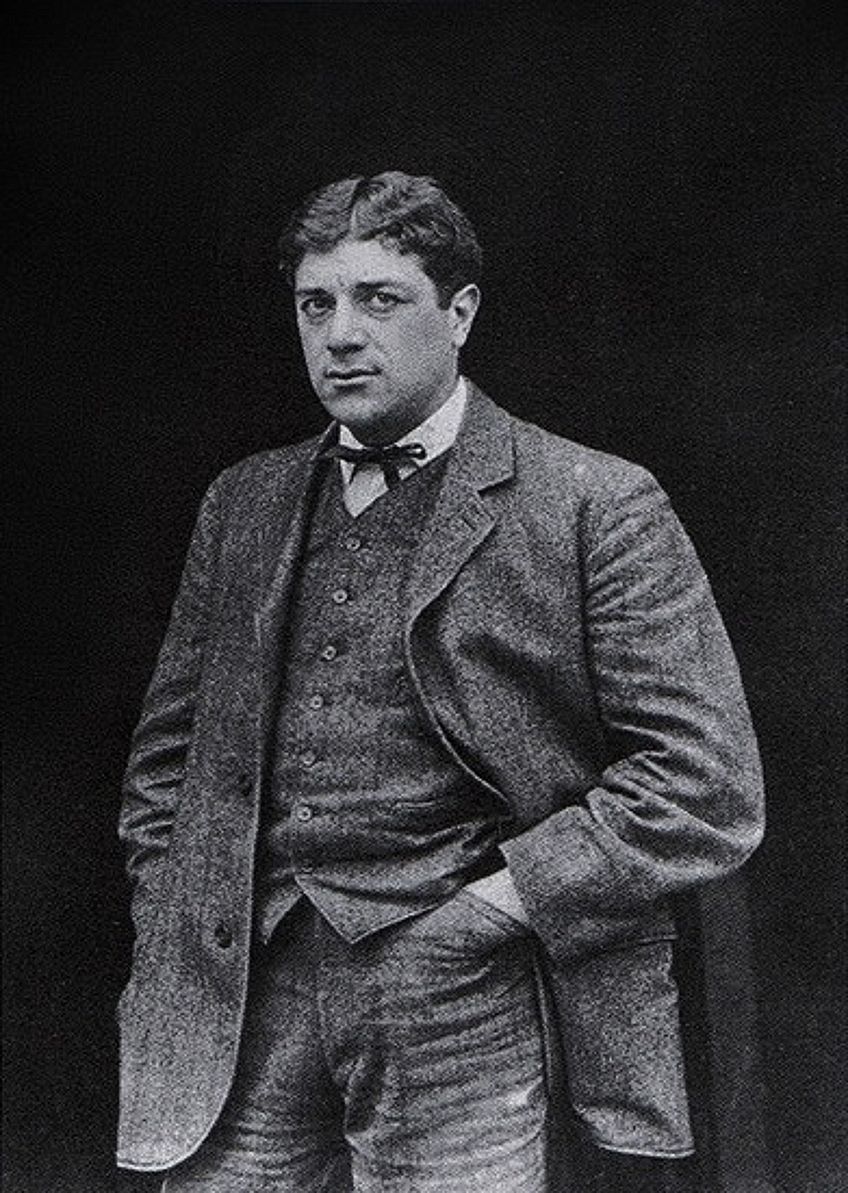 A photograph ofGeorges Braque in 1908, published in Gelett Burgess, The Wild Men of Paris, Architectural Record, May 1910; Photographer non-identified, anonymous, Public domain, via Wikimedia Eatables
Hans Arp (1886 – 1966)
Another influential artist within the Collage Fine art movement was Hans Arp. His collages were essentially Dadaist in nature, every bit he was profoundly affected past the insanity and trauma of war. In the aftermath of the Kickoff Earth War, Dada artists felt that traditional social systems and the focus they placed on reason were responsible for the state of war, and because of this, they sought to create art that was complimentary from all rational reason and deliberate tactics. Thus, the collages that Arp created embodied this style of thinking.
One of Arp'due south nigh notable collage works, created in Zurich between 1916 and 1917, was Untitled (Collage with Squares Arranged according to the Police force of Gamble). This abstract collage was fabricated up of a drawing that Arp had previously been working on simply later disregarded. He then tore the pieces of blue and white paper into squares of various sizes, which he let autumn to the floor. Once the paper had landed in capricious places, Arp pasted each chip where information technology was to create a work that rested upon the random chance of gravity.
Through leaving the creation of this collage completely up to chance, Arp adhered to the new anti-fine art manner that was established which avoided the traditional ideas of artistic talent. Arp'south Untitled collage was resolutely devoid of any further essence, as it simply consisted of torn scraps of paper that did not express whatever story or film. However, it can be argued that Arp did not fully abandon control inside this work, as the filigree-like system of his collage points to a form of construction that was subtly incorporated into the piece of work.
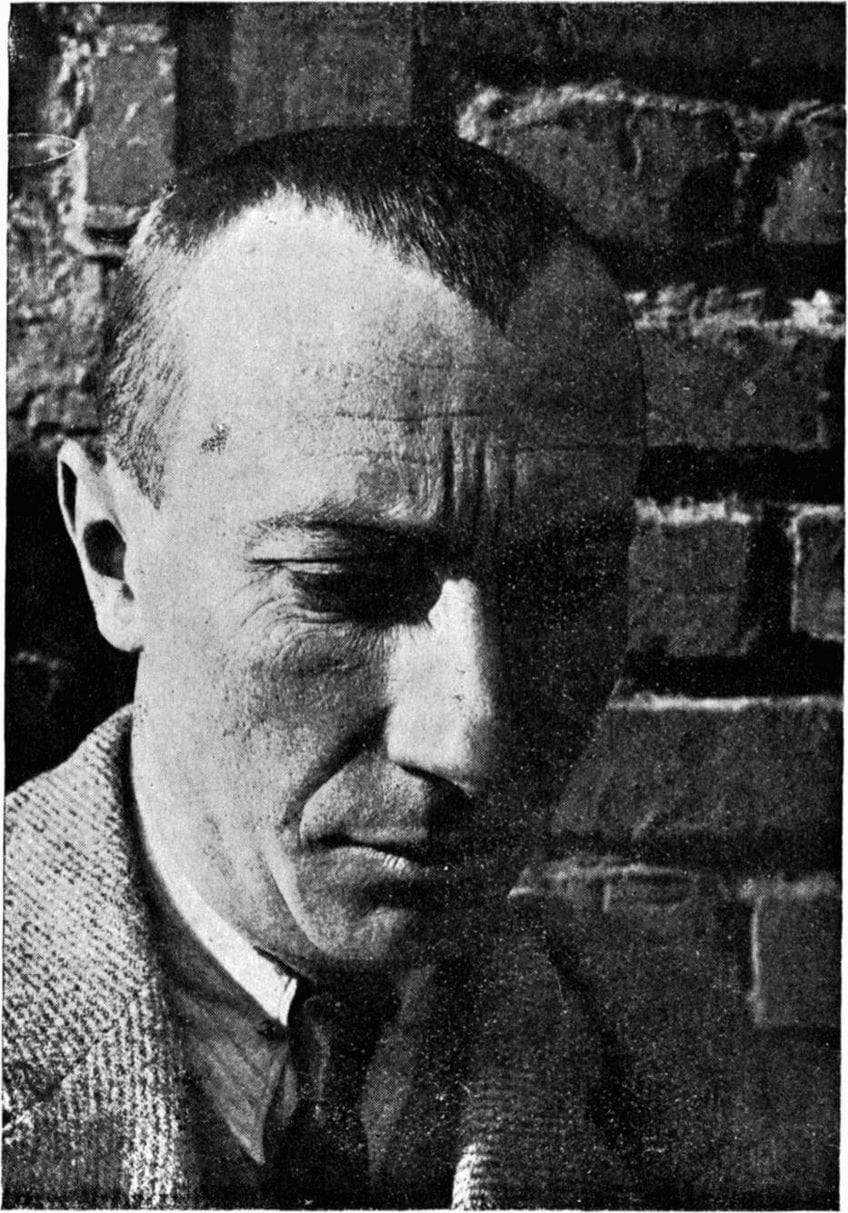 Photograph of Hans Arp (c. 1925); Vincent Steenberg at nl.wikipedia, Public domain, via Wikimedia Commons
Kurt Schwitters (1887 – 1948)
A pregnant contribution to the development of Collage Art was made past Kurt Schwitters, who began working on his influential collages in 1918. These works were made from paper and were constructed from rubbish that Schwitters had found on the street. His aim within his collage fine art was to create works that were able to cover all different types and styles of fine art.
Existing every bit another Dada artist, Schwitters produced collages and assemblages under the championship of "Merz", which was a concept he formulated. This concept included works that combined all possible materials for purely artistic reasons, as he argued that common and found objects such as forest and plasterboard were equivalent to paint and other formal artistic elements. Thus, one of Schwitters' most well-known works, created in 1921, included a variety of elements and was titled Merz Picture 32A, The Cherry Pie.
Within this multilayered artwork, Schwitters created this collage from different pieces of debris and objects that he had collected on the streets of his hometown in Germany. Schwitters' method of drove differed vastly from the actual creation of this work, as he purposely chose a spot and meticulously glued and nailed downwardly each item to a painted board. Areas of light and dark were created through the cut-outs, fabrics, and candy wrappers that were used, as the combination of these materials helped create a sense of pictorial depth.
When considering Merz Picture 32A, the chaotic nature of the different elements used past Schwitters helped evoke the idea of a bulletin board total of notes and cards. The inclusion of the child's flashcard with the ruby-red helped mistiness the boundary that existed betwixt ordinary objects and painting, in addition to calculation to the transparent title of the work. Thus, Schwitters managed to create a collage that was completely disorganized and confusing, which subscribed to the Dada notions of the time.
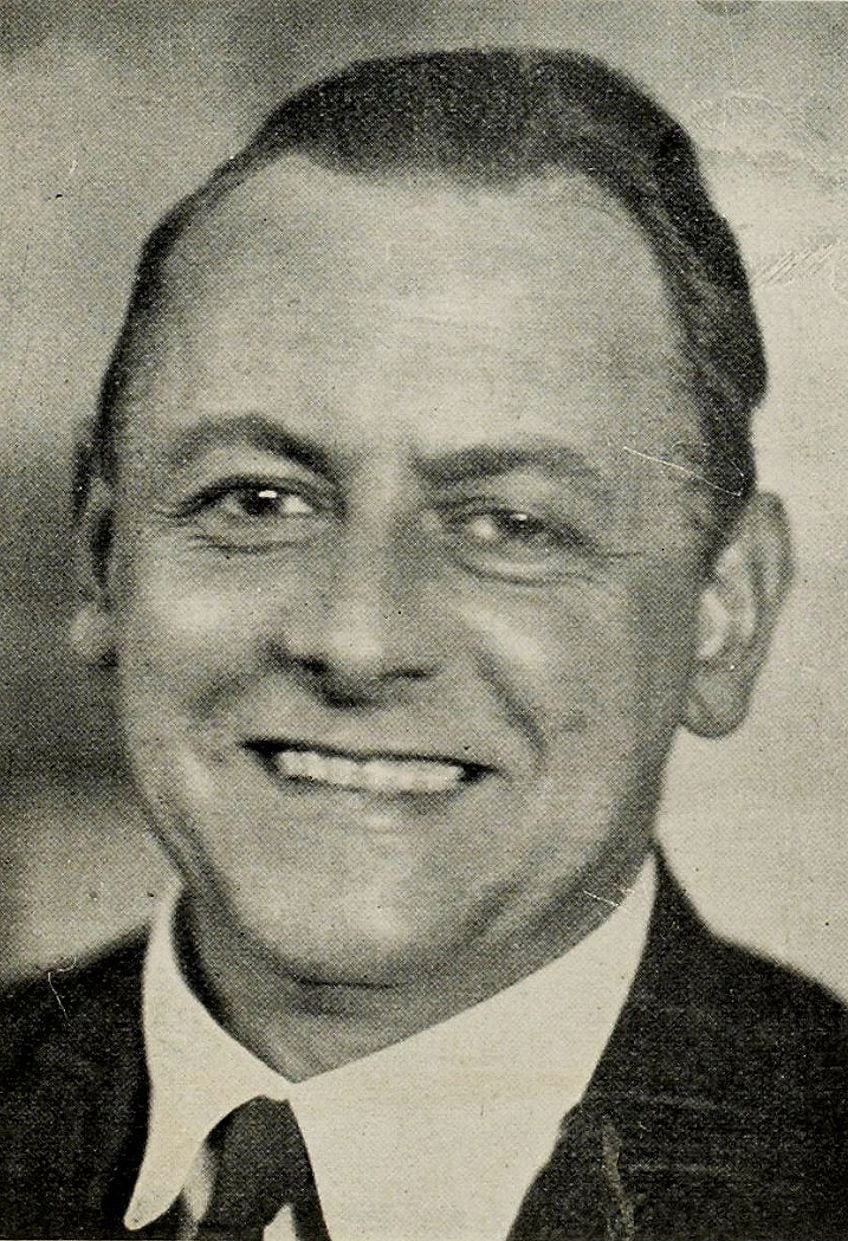 Photograph of Kurt Schwitters in 1927; Genja Jonas, Public domain, via Wikimedia Eatables
Hannah Höch (1889 – 1978)
An influential female artist who experimented within the Collage Art movement was Hannah Höch, who created some of the about iconic works from the collage catamenia. Höch started to create collages equally a young daughter and brought her kid-like techniques of sticking the wrong caput on the incorrect body into her works as an developed. Within her works, Höch investigated gender roles and politics, as she created a commentary that challenged the way society was structured and viewed itself.
Her about well-known work was created in 1919 and was titled Cut with the Dada Kitchen Knife through the Concluding Weimar Beer-Belly Cultural Epoch in Germany. Höch's piece of work was very politically charged, as she repositioned images and text from the mass media to criticize the shortcomings of the Weimar High german Government in the aftermath of the First World War.
Within her artwork, a seamless fusion is demonstrated between Höch'south ideas and techniques, as she made use of newspaper cutting-outs to call into question the sexist and racist rules that supported Weimar Germany at the time. Höch's work shows an epitome of Weimar order with its primary institution and anti-establishment figures in and amongst industrialized disorder. This piece of work was later exhibited at Berlin's Starting time International Dada Fair in 1920 and was a great success due to its transparency.
Höch created these photomontages for the remainder of her career, as she believed that at that place was no truthful limit on the types of materials that could be used to make up a collage. Through pioneering a form of art that made use of fashion mag cut-outs, illustrated journals, and photography, Höch demonstrated that art could be made up from the ordinary chaos of modern life. Her piece of work challenged racism and the identify of women in xxth century society, which later influenced contemporary artists such equally Cindy Sherman.
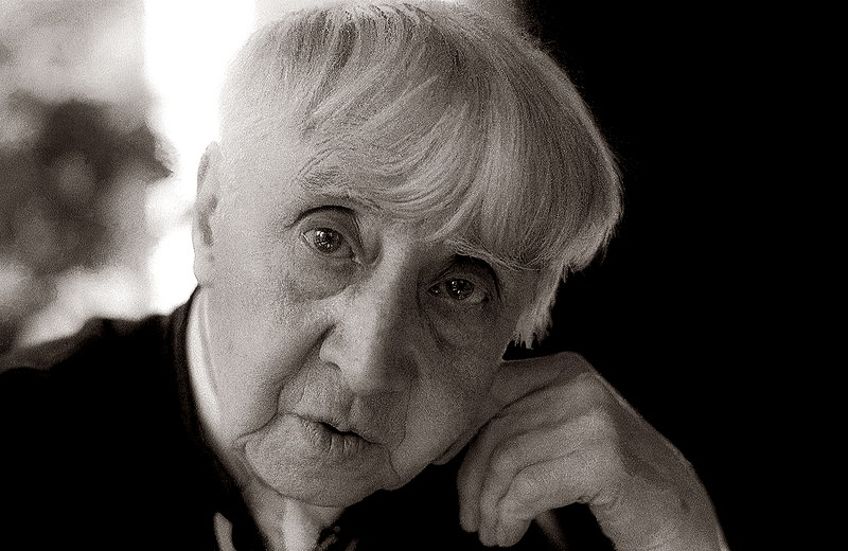 Photograph of Hannah Höch in 1974;Dietmar Bührer (de:Dietmar Bührer), CC BY-SA iv.0, via Wikimedia Commons
Collage Art in Other Forms
The development of Collage Art allowed the techniques that were created and refined to cross the boundaries of visual arts into other artistic spheres. Some of the almost well-known areas, amongst many others, where elements of collage have been incorporated include architecture, music, and film.
Compages
Although the pioneers of modern architecture used techniques that were closely related to collage, the theoretical concept of collage only became widely discussed after architects Colin Rowe and Fred Koetter published Collage City in 1978. While they were not advocating for collage in the graphic sense, Rowe and Koetter attempted to challenge the uniformity of Modernism through using the not-linear and disorganized ideals of collage.
Thus, collage within architecture was seen as a metaphor to revitalize the pattern practise.
Music
The style of collage has also fabricated its mode into the development of music. In the concluding half of the twentythursday century, the strides that were made in terms of the advancements in recording technology allowed innovative artists to start experimenting with the techniques of cut and pasting within music production.
A notable group who made apply of collage styles within their music was The Beatles. During the 1960s, English language producer George Martin worked extensively with the band and created collages of the recordings from their albums. Additionally, in 1967 the cover for their Sgt. Pepper's Lonely Hearts Lodge Ring made dandy employ of collage techniques.
Musical collages developed significantly throughout the latter part of the 20th century and by the 1990s and 200s, collage techniques became quite common within music. The almost popular music styles that utilized a class of collage were rap, hip-hop, and electronic music.
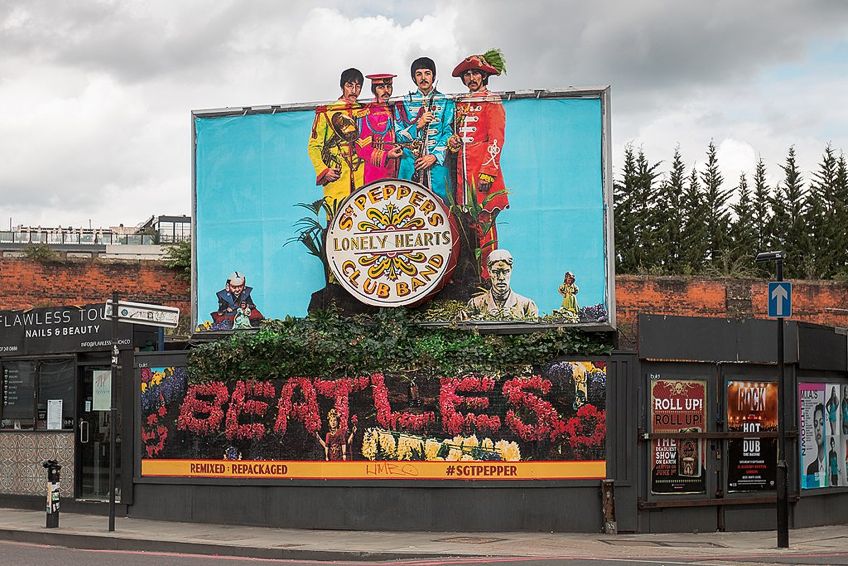 Sgt. Pepper'south 50th Anniversary Billboard in London (2017);Kreepin Deth, CC Past-SA four.0, via Wikimedia Eatables
Movie
Collage within film is best demonstrated when fictional scenes are interspersed with footage that has been sourced from a diversity of locales, such as newsreels. The combination of unlike types of footage into a motion-picture show carried various degrees of significance, which were dependent on the approach that the director took when filming. Collage inside moving-picture show tin can also encompass the physical collaging of materials onto the film strips. This technique was typical of Canadian filmmaker Arthur Lipsett, who was widely known for his collage movie works.
The Legacy of Collage Art
Due to the many techniques and styles that fabricated upwards the Collage Fine art motility, information technology is still easy to wonder: what is a collage in its entirety? Thus, it was said that collages painting and artworks were predominantly used to address a variety of issues, due to the technique'due south ability for vast social commentary. Often within collage, artists would leave hints within their artworks that alluded to social and political concerns, as collage gave artists the chance to comment on issues through the utilize of familiar objects and images.
The legacy of Art Collage can be seen through the many young artists that have continued to piece of work in this medium and have produced artworks. Collage Fine art had the ability to tell the story of each different artistic generation through the commentary information technology creates, which allows for truly fascinating works to be created. Within the contemporary area, collage has been viewed every bit the base of the digital experience due to its vast experimentation with layering and interjecting of unlike mediums to make upwards one work.
Tips for Making Your Own Collage
Have y'all e'er wondered what is a collage and if anyone can make one? While this type of art creation may seem daunting at starting time due to its chaotic and disorganized nature, the art of collage is entirely possible for anyone to experiment with. Withal, before constructing your ain collage, hither are two tips to consider when starting out with this cut-and-paste style.
Collect and Create Your Own Source Textile
When making your own collage, it volition be beneficial to first developing a library of different collage materials for you to choose from. In doing so, you will be able to peruse through what you already have when starting a new collage before having to go out to buy new items.
Some one-time items that tin be kept to utilize within collages at a later on phase include onetime books, photographs, wear, and recycled paper. Additionally, yous can likewise choose to create your own unique source materials when working on your collage. This can exist done past painting pieces of paper and and then cutting them upwardly into any shape you want.
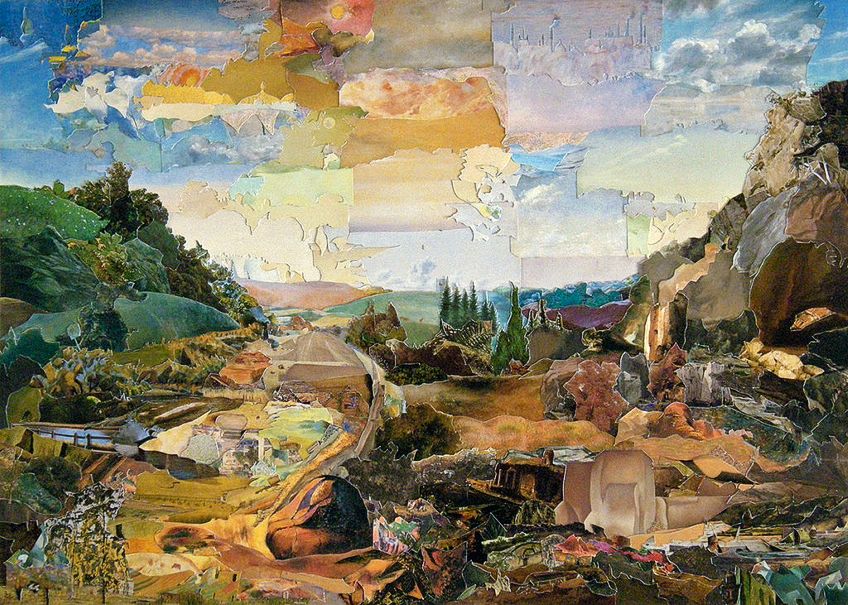 Painting with Warm Colours (2009) collage from art postcards, by Hendrikje Kühne und Trounce Klein;Hendrikje Kühne und Beat Klein, CC By-SA 3.0, via Wikimedia Commons
Organize Your Composition Prior to Gluing It Down
Before you permanently attach your materials to your bankroll, information technology would be wise to take some time out to plan your composition. Collage differs from two-dimensional mediums equally allows y'all to arrange your elements in any way that you lot want to within your artwork. Take advantage of this medium's flexibility by experimenting with unlike compositions before committing to the final await.
If you are a beginner to this medium, information technology is suggested to focus on ane or two of the basic elements at first so every bit non to exist overwhelmed. These elements include line, color, grade, shape, or texture. If you detect that your composition has likewise many elements, endeavour restricting the number of materials you are working with until yous are satisfied with the outcome.
Throughout Collage history, the works that were created were securely referential of the political climate that existed at the time. Thus, the mode of collage proved to be a suitable medium for social commentary, as information technology allowed artists to abandon the formal elements that had previously governed art in gild to create works that honestly represented modernistic society. In essence, Collage Fine art blatantly questioned the ideals that fabricated upward an artwork, whilst offering a reflection on the change and upheaval that characterized the 20th century.
Have a expect at our Art Collage webstory here!
Source: https://artincontext.org/collage-art/
0 Response to "Picassos Art Style Sticking Jornal Pieces on the Paintings Is Called"
Postar um comentário