Who needs Internet when you can swim with sharks in Indonesia’s Forgotten Islands?
Advertizement
CNA Lifestyle
Who needs Internet when you can swim with sharks in Indonesia's Forgotten Islands?
Information technology takes about 24 hours to fly to the Banda Sea for some unforgettable diving, the noisiest reef you'll hear and some of the remotest places you'll visit – and information technology was worth it.
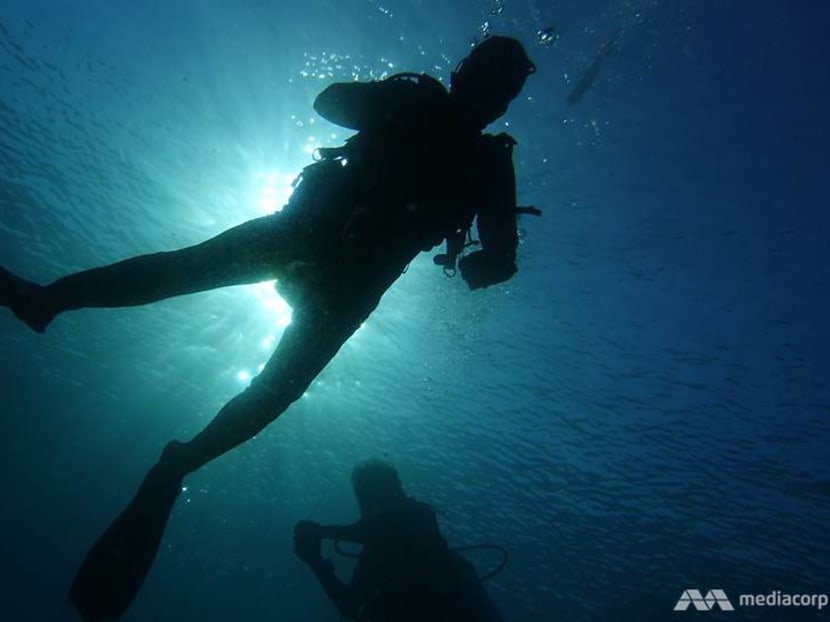
A diver exploring the seas in Republic of indonesia's Forgotten Islands. (Photo: Chew Hui Min)

The water was a steely blue and we spotted shadows in the distance. Every bit we finned nearer, the sinuous outlines resolved into dorsal fins and scalloped snouts: Hammerhead sharks.
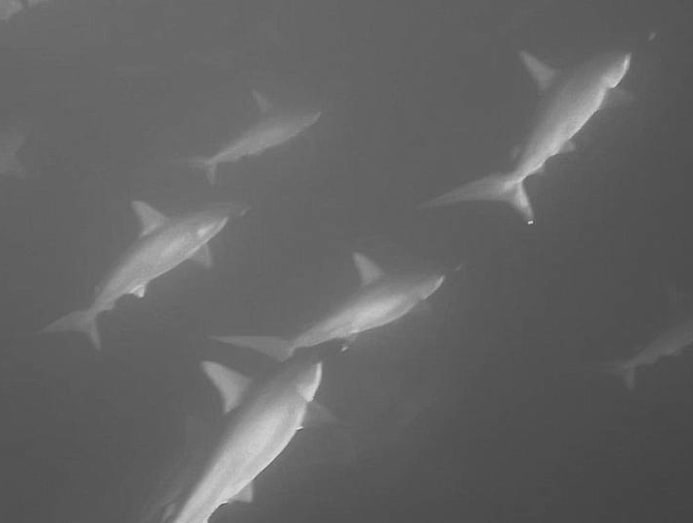
Below u.s., at depths of more than than 35m, a stream of sharks flowed silently past. There were dozens, peradventure a hundred, too many to count.
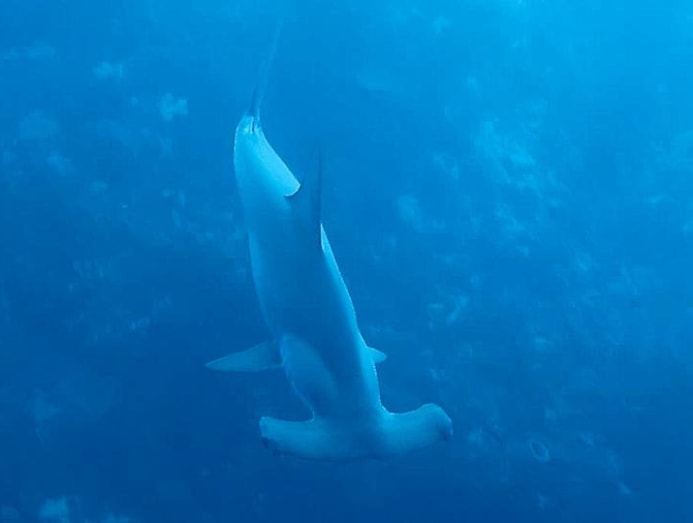
My animate quickened every bit we watched the purple creatures cutting swiftly through the water, at times barely an arm'south length away from our grouping of vii defined.
It was the largest school of hammerheads we saw in xi days of diving around the Forgotten Islands, merely it was non the only encounter.
Indonesia's eastern seas are famed for their beauty and biodiversity underwater, and the waters around Raja Ampat and Komodo are on the bucket lists of many scuba divers.
But The Forgotten Islands – tiny isles east of East timor dotting the Banda ocean – were never on my list because I had never heard of them, until we booked a trip on board the MY Oceanic last month.
THE MUSIC OF THE REEF
For me and my dive buddy, the describe was the chance of swimming with hammerheads, merely the near-pristine reefs and variety of marine life blew our minds.
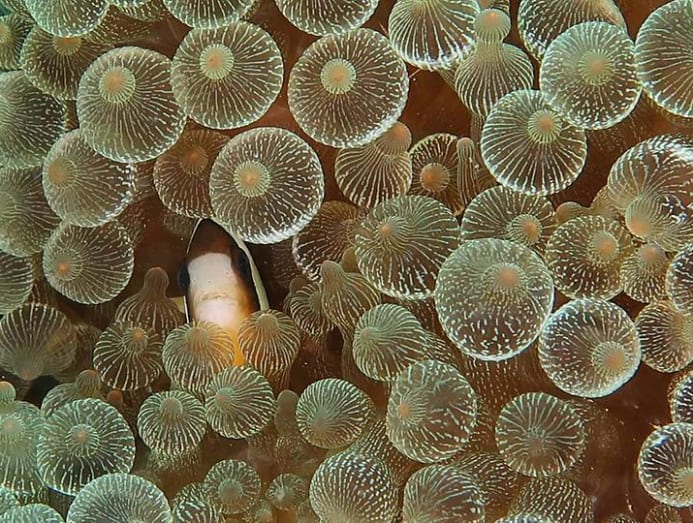
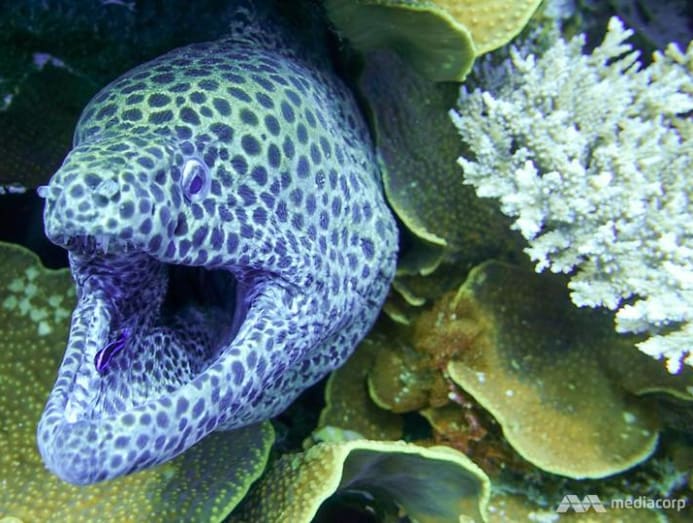
There was the monster grouper that glowered at me from deep inside its cavern, with eyes as big as saucers; pygmy seahorses barely the length of an eyelash; Napoleon wrasses more than a metre long; venomous blue-band octopuses prowling the seafloor; the ugly-adorable frogfish with its impossibly wide maw – the listing can go along forever.
And e'er, in that location was the presence of clouds of fusiliers and other pocket-size, colourful fish darting around, parting and coalescing in chorus.
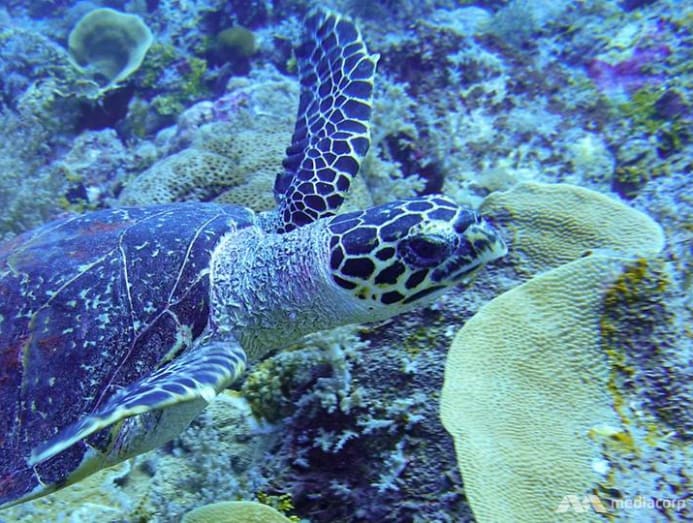
There was also the current, which dictated the rhythm of our dives as nosotros zipped speedily through the bluish or floated serenely atop reefs lush with life. Information technology was liberating and exhilarating, equally nosotros rode information technology like an underwater highway.
On i occasion, all the same, information technology turned scary when a downcurrent suddenly pushed me more than 10m deeper in seconds. Frenzied kicking got me out of the relentless push of the water, merely non without a few heart-stopping moments.
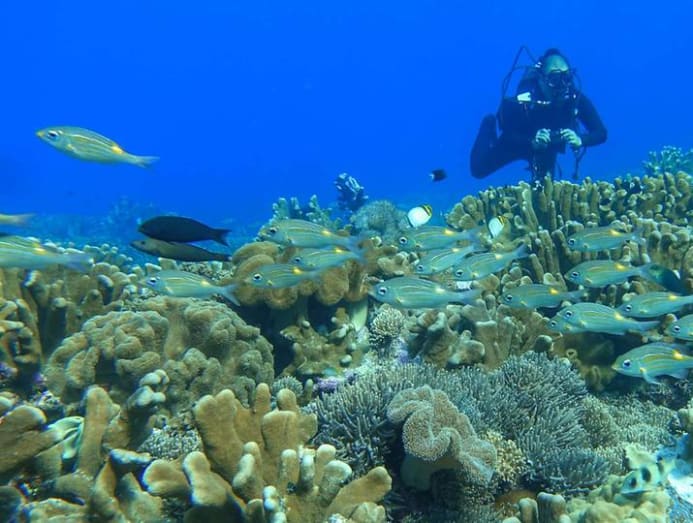
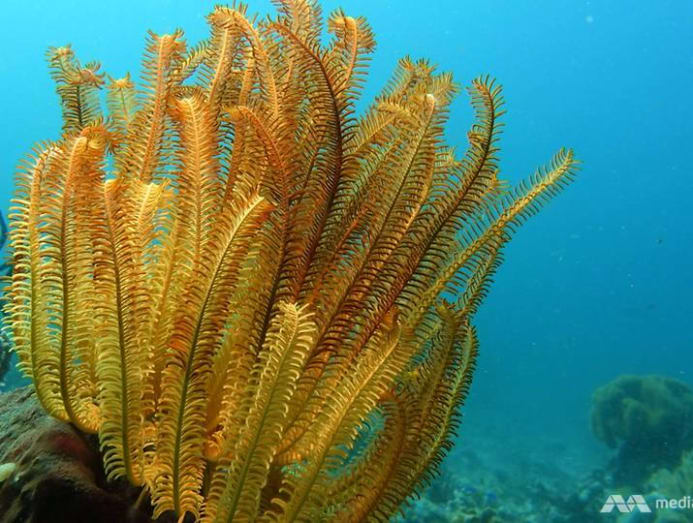
And each time nosotros descended into the water, a cacophony of clicks and pops erupted equally we neared the reef. Information technology was music to my ears. The crackling noise came from the activity of millions of reef inhabitants and was a good indicator of the ecosystem's health. I had never heard reefs this loud, or seen corals of this size other than at these far-flung islands.
UNPLUGGED, Afloat
Indeed, the one creature we inappreciably encountered underwater were other divers. And this was not a trip for the newly certified diver or anyone who has to bank check his or her emails, Facebook newsfeed or WhatsApp messages.
Too sporadic bursts of mobile telephone connection when we came close to a jail cell tower on an isle, there was no Internet for at to the lowest degree a calendar week.
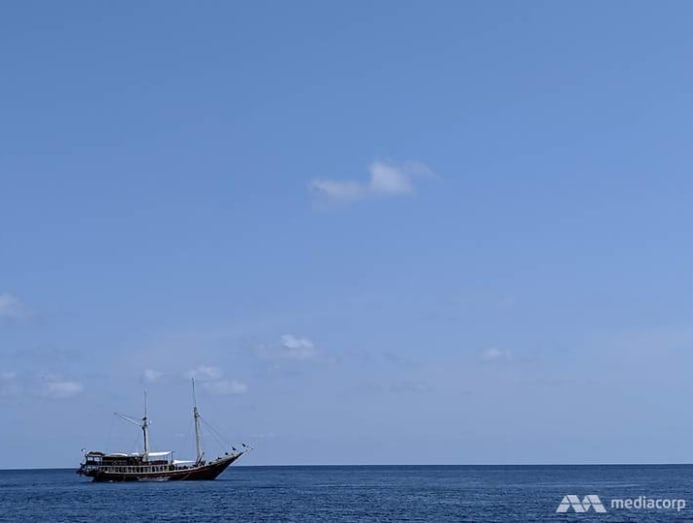
From Singapore, nosotros flew to Dki jakarta, jumped on a domestic flying to Ambon, waited vii hours, then lugged our potent bodies on another flying to Saumlaki in the Tanimbar Islands of Maluku.
From at that place, we sailed west, plotting a voyage beyond the Banda Sea and stopping to dive at islands such as Dawera, Serua, Teun and Nus Leur. Most of the islands had a total of one village on them.
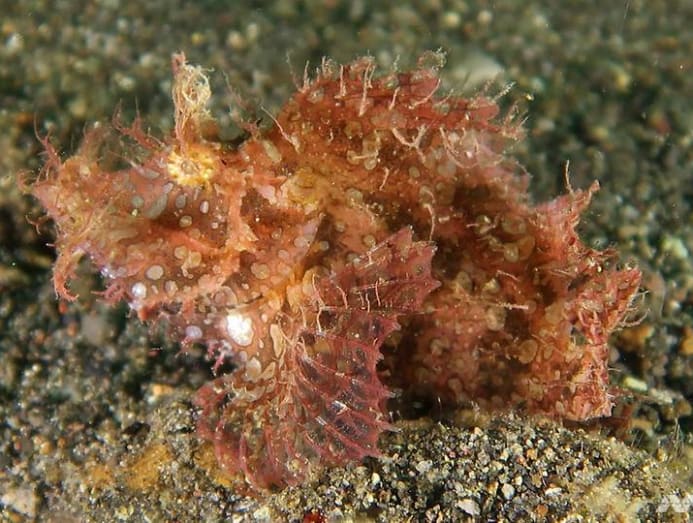
After xi days, we put into port at Kupang, the biggest city on the island of Timor, and the most cosmopolitan identify we visited during the journey.
The unlooked for side effect of such a trip was having to unplug for more than than a week. Instead of looking at screens, we watched spinner dolphins cavorting in the water and enjoyed cheese (which nosotros brought) while watching sunsets, read books, and talked to the crew and other divers.
A WORLD FORGOTTEN
Nosotros as well visited some of the villages on the islands. They may exist remote but some have begun to realise the potential of tourism.
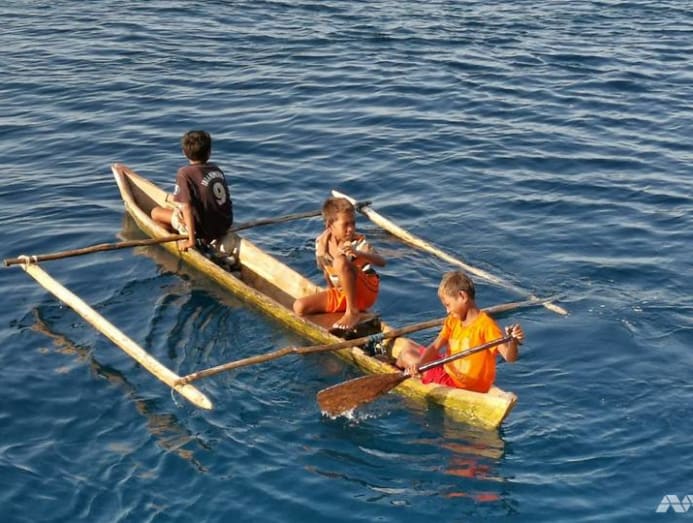
At the village of Welora on Dawera, we were greeted with a rousing welcome song and dance by the school children, accompanied past (information technology seems) all the percussion instruments that could be found on the island.
The young band, singing at the top of their voices, trailed united states of america as we toured the village – a slap-up little town of paved streets with street lamps, clear road signs and well-built physical houses.
At the hamlet foursquare in front of their church, nosotros tried traditional snacks and drank from fresh, whole coconuts. Many of the islands' residents are Christian due to the Portuguese and Dutch influence in the 16th century.
We were amazed when told that they have a homestay programme, a Facebook page and an Instagram account. Just Welora was not the norm. At many other places, they still cultivated traditional crops such as cloves and nutmeg.
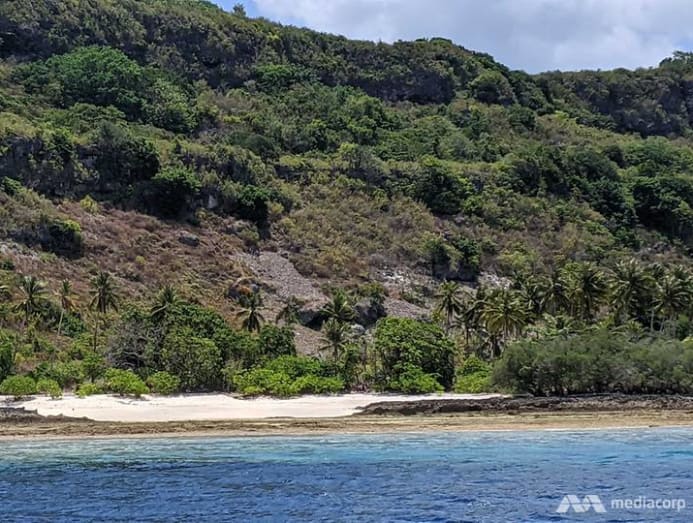
At night, drowsy from four dives and a hearty dinner, us metropolis dwellers bathed in starlight on the deck of the boat, enchanted by faraway constellations normally outshone by the bright lights of our urban haunts.
The whole routine of diving, eating, sleeping and drifting, and the fresh air, body of water and sun, felt like therapy from our hectic lives. It truly was another world, nearly forgotten and virtually celibate in its seclusion.
0 Response to "Who needs Internet when you can swim with sharks in Indonesia’s Forgotten Islands?"
Postar um comentário